

Before running a cacheable task, Nx calculates a hash from the task's inputs. Two runs with the same hash represent the same computation, so Nx can reuse the earlier result.
A task hash can include:
- Project source files and files from project dependencies.
- Relevant workspace configuration.
- Versions of external dependencies.
- Runtime values, such as the operating system and CPU architecture.
- Command-line arguments passed to the task.
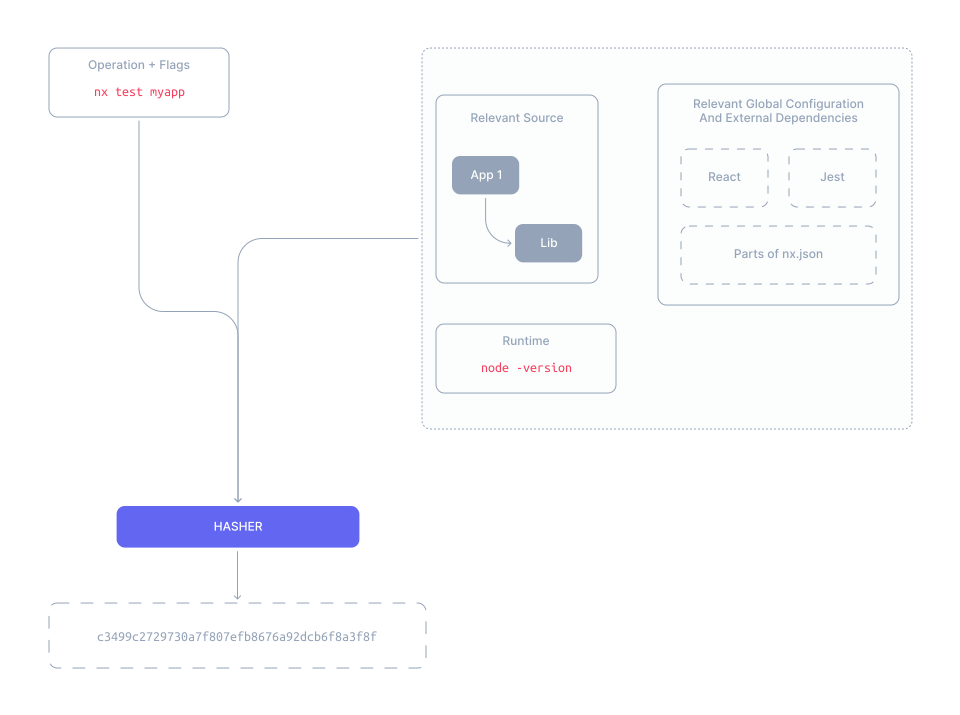
You can customize these inputs for each target. For example, a lint target might depend on source files but not documentation, while a build target might depend on generated declaration files from its dependencies.
Cache lookup and storage
Section titled “Cache lookup and storage”Nx checks the local cache after calculating the hash. If it doesn't find a result and remote caching is configured, Nx checks the remote cache. On a cache hit, Nx restores the cached output files and prints the stored terminal output.
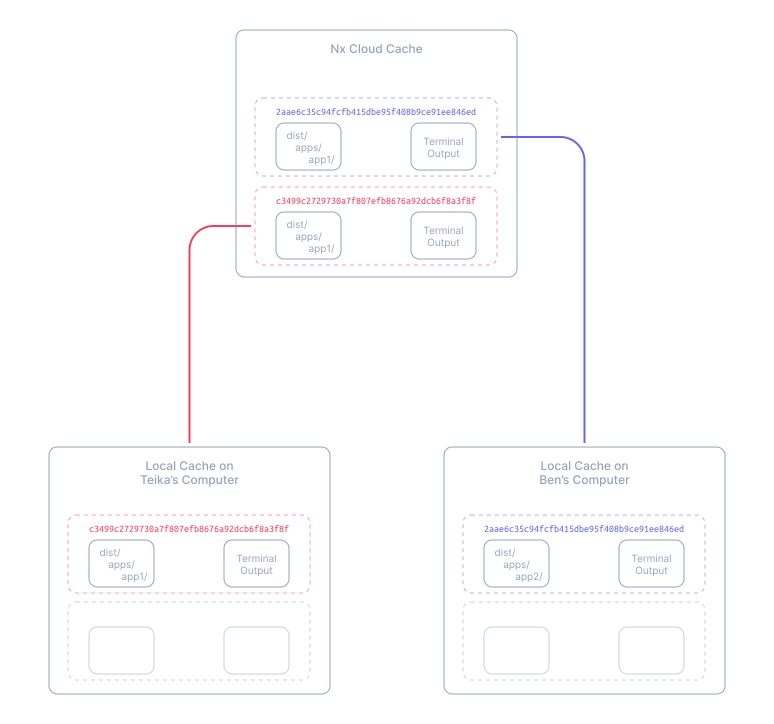
On a cache miss, Nx runs the task and stores its terminal output and configured output files in the local cache. Nx also stores the result in the remote cache when remote caching is configured and the current authentication settings permit writes.
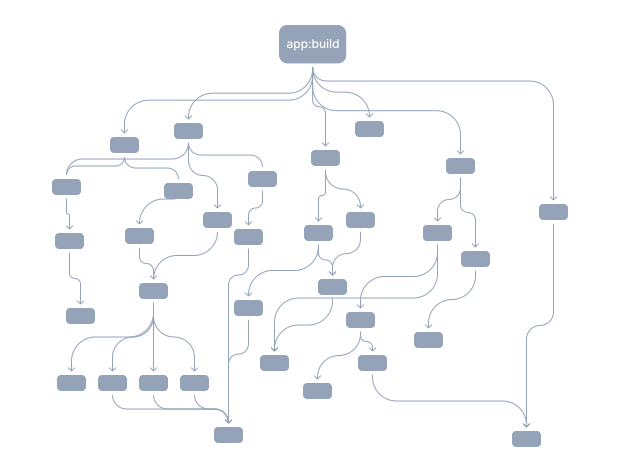
Nx processes each node in a task graph independently. Some tasks can be cache hits while other tasks run normally.
Cache inputs and outputs
Section titled “Cache inputs and outputs”Each cacheable target has inputs and outputs:
- Inputs determine the task hash.
- Outputs identify files and directories to store and restore.
Plugins infer these settings when they understand the underlying tool. You can override inferred values globally in nx.json or for one project in package.json or project.json.
For detailed configuration options, see configure inputs and configure outputs.
What Nx caches
Section titled “What Nx caches”Nx caches task results at the process level, regardless of whether the task builds, tests, lints, or runs another tool. A cache entry contains:
- Terminal output written to standard output and standard error.
- Files and directories matched by the target's
outputsconfiguration. - The task hash used to identify the entry.
Nx doesn't store the source files and other inputs inside the cache entry. It uses their hashes to calculate the task hash.
The following project-level configuration overrides the inferred outputs for build:
{ "name": "myapp", "nx": { "targets": { "build": { "outputs": ["{projectRoot}/dist"], }, }, },}Use targetDefaults to apply the same output configuration to matching targets across the workspace:
{ "targetDefaults": { "build": { "outputs": ["{projectRoot}/dist", "{projectRoot}/build"], }, },}When outputs isn't configured, Nx uses an executor's outputPath option as a backward-compatible fallback. For build and prepare targets without an outputPath, Nx checks common dist, build, and public directories. For reliable caching, prefer outputs inferred by a plugin or configure outputs explicitly.
Configure inputs
Section titled “Configure inputs”Nx includes all files under a project root by default. Plugins and namedInputs often provide more focused input sets. You can exclude files that don't affect a target or include environment variables, runtime commands, and external dependencies.
{ "targetDefaults": { "build": { "inputs": ["production", "^production"], }, "test": { "inputs": ["default", "^production"], }, },}The ^production input includes the production inputs of project dependencies. Project-level configuration can extend or replace these values when one project needs different hashing behavior.
{ "name": "some-project", "targets": { "build": { "inputs": ["...", "!{projectRoot}/**/*.md"], ... }, "test": { "inputs": [...] } ... }}Inputs may include the following:
- Source files that affect the task.
- Environment variables that affect the task.
- Runtime inputs that affect the task.
- Command-line arguments passed to the task.
Learn more about fine tuning caching in the Fine-tuning Caching with Inputs page.
Command-line arguments
Section titled “Command-line arguments”Arguments passed to a task affect its hash because they can change the result. For example, these commands produce different hashes:
nx build myappnx build myapp --sourcemapDifferent Nx command forms that create the same task with the same task arguments produce the same hash. These commands are equivalent for caching:
nx build myappnx run-many -t build -p myappWhen you run a target for multiple projects, Nx calculates a separate hash for each task. One project can be restored from cache while another project runs.
For setup and troubleshooting options, see cache task results.